
The Caregiving Contract Is Breaking—What Comes Next
The traditional expectation that families will care for aging loved ones is quietly breaking down. This article explores what happens when that support is no longer consistent—and how early disengagement can lead to faster functional decline, increased risk, and loss of independence.
ALZEIHMER'S AND DEMENTIA239RESULTS HOME CARELIFESTYLE AND LEISURECOGNITIVE ENGAGEMENT SPECIALIST
239Results Home Care
5/3/20263 min read
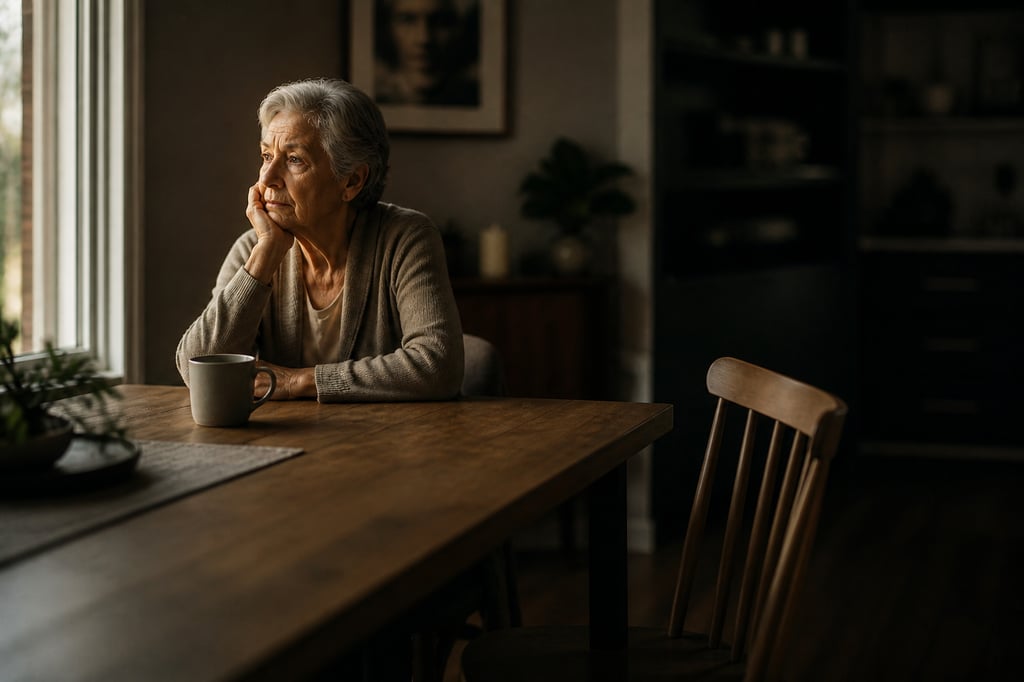

The Caregiving Contract Is Breaking—What Comes Next
For decades, there has been an unspoken agreement in American life:
When people age, family will step in.
Not formally. Not written down. But understood.
A daughter rearranges her schedule. A son checks in more often. Someone takes on the role of making sure everything is handled—appointments, meals, safety, presence.
That expectation shaped how aging has been managed outside of institutions. It filled the gaps where formal systems were limited.
But that model is no longer stable.
And most people have not adjusted their expectations to match that reality.
The Model We Still Assume Exists
The traditional caregiving structure depends on three conditions:
proximity
availability
capacity
At one time, those conditions were more common. Families lived closer. Schedules were more flexible. Roles were more defined.
Caregiving, particularly for aging parents, was absorbed into the rhythm of family life.
It wasn’t easy. But it was assumed.
That assumption still exists.
The structure does not.
Why Capacity Is Shrinking
The shift is not theoretical. It shows up in how people actually live.
People are working longer hours and managing tighter financial margins.
Families are spread across cities, states, and time zones.
Emotional boundaries are more clearly defined, and not everyone is willing—or able—to take on long-term caregiving roles.
Even when there is willingness, there is often no sustainable way to provide consistent support.
The result is not neglect.
It’s limitation.
And limitation creates gaps.
Where the Gap Actually Begins
Most people believe the problem begins with a crisis.
A fall.
A hospitalization.
A diagnosis that forces a decision.
That’s not where it starts.
It starts earlier—with disengagement.
A person speaks less.
They hesitate more in conversation.
They stop initiating tasks they once handled easily.
Nothing urgent. Nothing dramatic.
But the pattern is there.
And in many cases, no one is consistently present to recognize it, respond to it, or maintain it.
The Difference Between Safety and Function
This is the point where the model breaks most clearly.
Because there is a critical distinction that often goes unaddressed:
Care maintains safety.
Engagement maintains function.
A person can be safe and still be declining.
They can be supervised, assisted, and monitored—and still be losing:
communication
participation
cognitive responsiveness
Safety prevents immediate harm.
Engagement sustains the systems that allow someone to function in daily life.
When engagement is missing, decline continues—quietly, steadily, and often unnoticed until it becomes visible in more serious ways.
The Progression Most People Don’t See
When disengagement is not addressed, the sequence is consistent:
Reduced engagement
→ reduced cognitive activity
→ reduced physical movement
→ decreased stability and awareness
From there, risk increases.
Falls become more likely.
Confidence decreases.
Independence begins to erode.
According to the Centers for Disease Control and Prevention, falls are a leading cause of injury among older adults, with millions occurring each year. While often labeled as accidents, many are tied to underlying changes in balance, strength, and awareness—systems that are influenced by both physical and cognitive engagement.
By the time a fall occurs, the earlier stage—where function could have been supported more effectively—has often already passed.
What Replaces the Family Model
This is the question most people have not fully considered:
If families are less able to provide consistent caregiving, what replaces that structure?
In many cases, the answer is reactive.
Support is brought in after a visible decline.
Care increases after an incident.
Decisions are made under pressure, not planning.
And without a system that actively maintains engagement, the trajectory continues.
More support becomes necessary.
Function continues to decline.
Options become more limited.
For many, this leads to institutional care—not as a first choice, but as the remaining one.
Insight
When engagement is not maintained early, care becomes reactive—and reactive care always arrives after loss has already occurred.
A Different Way to Understand the Problem
The breakdown of the caregiving model is not only about who provides care.
It’s about what kind of support is missing.
The missing layer is not supervision.
It is intentional, consistent engagement that supports:
thinking
communication
participation
daily function
Without that layer, even well-meaning care systems struggle to preserve independence.
Because they are managing outcomes, not maintaining the processes that prevent them.
What This Means Going Forward
Aging has not changed.
Expectations have.
And the gap between the two is where most people will find themselves unprepared.
The question is no longer:
Who will take care of me?
It is:
Who will maintain my ability to function before decline accelerates?
Because once that question becomes urgent, the window for early intervention has already narrowed.
Final Thought
The traditional caregiving model worked because it was consistent.
It provided presence, repetition, and engagement—often without naming it.
As that model fades, those elements do not disappear.
They simply become less guaranteed.
And when they are missing, the consequences are not immediate.
They are gradual.
They are subtle.
And they are often recognized too late.
What comes next will not be defined by whether people receive care.
It will be defined by whether anyone is maintaining the conditions that allow them to stay connected, responsive, and capable in their own lives for as long as possible.